
(An Explanation of the 12 Poem Series About My Journey in Grief)
Dear reader,
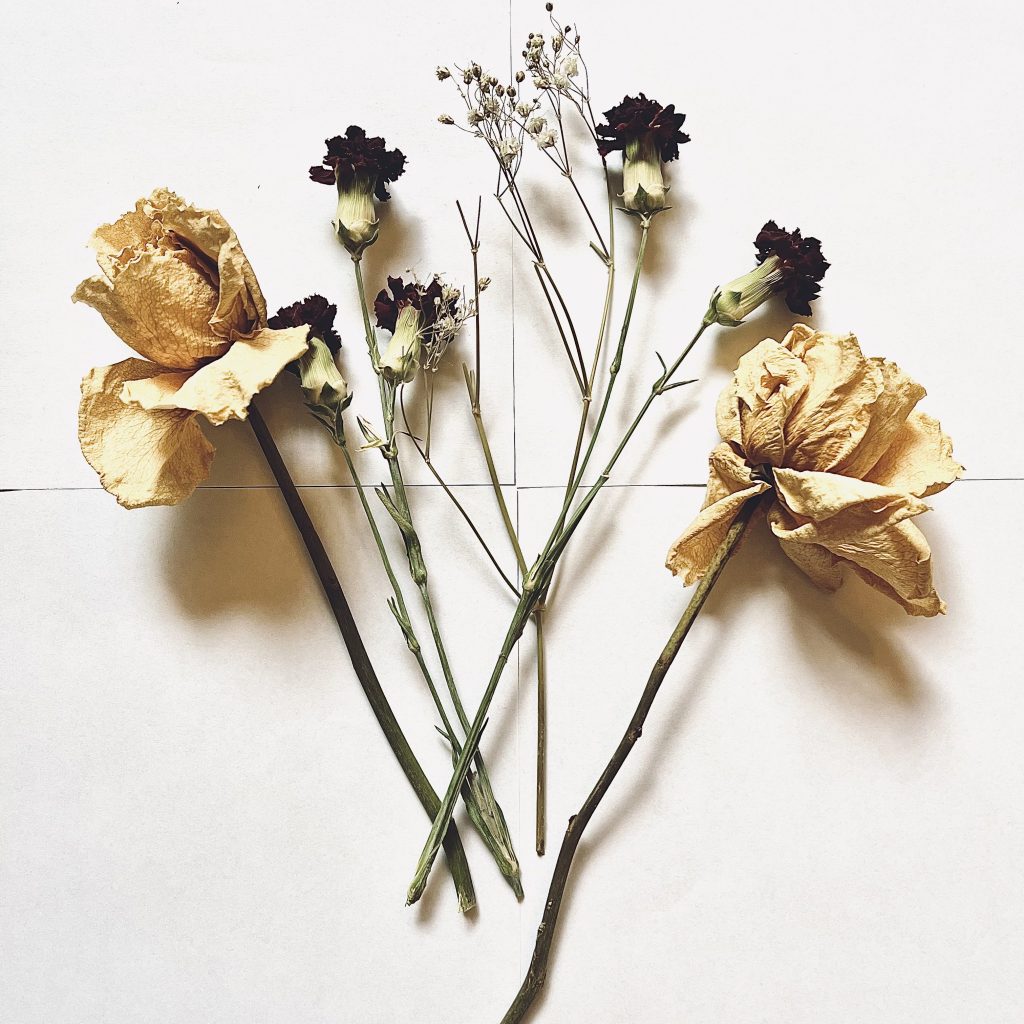
This is my journey through grief. My deep hope in writing this collection is to give words to situations that often feel expressionless, such as the many facets of loss. Feelings are embodied and repurposed. Long-suffering is unavoidable yet that coexists with the promise of hope. The cover image mimics Luci Shaw’s cover for The Generosity, with the unique twist that the flowers in the image are the dried flowers given to me on my brother’s birthday two years after he passed. In each poem, I have covered a specific aspect of my journey through poetic forms and styles that were intentionally selected to help the reader step into the shoes of the narrator. The first poem uses an interrogative mode of writing to coincide with the thoughts I had during my brother’s diagnosis. It asks questions that never receive an answer, much like the reality of a terminal illness. The second poem draws upon color and sensory imagery to express my dwindling loss of hope as my brother went in and out of hospital visits only seeming to fade, to become yellow—a color that previously had the power to brighten my spirits. The third poem utilizes the poetic form called a palindrome. The call my family received to suggest that we should come say goodbye felt sudden and final. Though he lived a month longer, it was my goodbye. I felt that this poem conveyed how the sound of the call and the sound of my brother’s heart were both haunting. The fourth poem may seem like the most emotionless because of its numerical illustration. My final goodbye, which should have carried so much significance, was reduced to a short goodbye that left no time for feeling the way I wanted or needed. He meant so much more than what he was reduced to. If it feels unsatisfying to read, it is because it was unsatisfying to have lived. The fifth poem was just about mom’s cry. A mother’s grieving wail is so moving that it deserved attention of its own as another sound that haunted my memories. I chose to represent this idea with couplets that mimicked the cry itself. Each couplet is meant to be read in one breath—the first line an exhale, and the second an inhale. If done properly, your body should feel the tension of releasing more than you can take in, embodying the gut-wrenching impact of loss on a mother. The sixth poem utilizes the poetic form called a ballad. Plainly put, this was raw and specific because sometimes imagery does not cover what can be communicated through pure honesty. It is the piece of bringing darkness into full exposure before the light takes hold of my story. The seventh poem is an ekphrastic poem, responding to the series of paintings hung above the classroom table in my poetry class. Its abstract form was the perfect representation of what it felt like to leave home and come to university in Canada. The eighth poem utilizes the poetic form called a haiku. This was chosen to say a lot with very little. Poem eight captured my struggle with feeling like I had no place to turn to. The ninth poem uses the poetic form called the sonnet. The ending couplet is supposed to resolve the problem in the first three stanzas, thus I used this form to showcase the piece of my journey that was having no place but Jesus. In poem ten, I responded to David’s Psalm 13 to mimic his cry of grief and praise in conversation with the Lord. This represented my period of contemplation as I learned to identify myself with Christ as a foundation to begin healing. The eleventh poem uses the poetic form called the pantoum, where repeated lines allow me to expound upon each piece of my journey as I returned home early that first semester of university. The Lord’s character is consistent and repetition allowed me to allude to this trait. Finally, poem twelve closes the collection as a retrospective attempt to summarize things observed and learned so far in my journey of grief. It does not mask pain, but it directs it. I hope you enjoy and allow yourself to be encouraged by the hope that comes from the cross!

 Dear Jane